Wednesday, 19 April 2017

Board games are Card games are c-Roleplaying games?

I follow kickstarter board games quite heavily, actually, all kinds of games, if its being Kickstarted, I want to read about it, this gradually started about 2012 or so, and I was a kind of local guru on 'what makes a good kickstarter' enough to run some workshops for some people in different industries that had heard about me..

After I returned to Oz, It slowed a little, yet I kept my finger on the pulse.. just ignored that pulse a little too often and missed 2-3 great games (and likely ended up paying more than I should have to get them later on)

The most interesting thing I've noticed recently is, the blurring of the lines between the different genres of

Board game, Card games and c-Roleplay Games

Lets double check we're on the same page with these things.

Board games of 2011!
Board games, typically have a board, pieces, sometimes of board, sometimes of wood or plastic. They have rules for moving/placing/removing the pieces, which results in score or win/lose conditions.

Card games, produced by fantasy flight!


Card games, typically have cards (made of thin boards ;) ) which are played according to rules about placing, moving or removing, which results in scoring or win/lose conditions.

If you think Diablo is an RPG, stop reading and go away


c-(components of or computer variety) roleplay games, have rules, which are played according to rules, about placing, moving or removing (from your character sheet) which represents an avatar. c-Roleplaying games result in a win/lose condition (and sometimes even score)


Yes, I know.. Roleplaying games, are different, that is, REAL roleplay games, are a set of rules or guidelines in order to tell a fun, yet believable story, some of that fun is understanding the restrictions of the character you are playing, which is represented by a set of rules, but those rules are to help people to feel fairness and order, not to represent any value or score or win conditions.. which seems to be lost on anyone who grew up with the c-variety of roleplay games as staple.. but thats not the topic of this blog.. I just wanted to clarify for you, so the comments section won't have anyone ... 

well forget it.. people comment, its the internet, so I'll just leave that.. 

So, to re-clarify, Computer/Component roleplay games are about levels, bonuses, equipment and numbers, of monsters killed. be it in a computer, or a psudeo-RPG-in-a-book variety.
These are board game cards, almost as complex as D&D

Back to my point

I've recently seen some awesome looking board games, that have charactersheets.. not Dungeon crawls, I like dungeon crawls, they break down the idea of the game and simplify it to be played in 45 minutes. my first real board game, was Heroquest. ahh Heroquest.

Heroquest is the best game ever made.


No, I'm talking about these new games, where the in-game charactersheet is more complex than Dragon warriors.. the simplest roleplay game I know of. 
Maybe, just maybe I've played for DW than any other system (except my own, based on DW)

Take this concept.. Monster are attacking a castle, the players are playing heroes, who are slinging spells, making actions, to hold back these monsters. At the same time they're placing workers to shore up the battlements, set up traps or defences to push back the invaiders, or gathering resources to prepare. Sounds ok as a game, yet the 'heroes' are not just Health tokens, Magic tokens, some weapon cards and skill/spell cards, no, they have progression, they level up, they gain backstory, they gain so much more.. More than a fully realised DW character.. If I wanted a roleplay character on a board game.. why wouldn't I simply get my DM to create the plot to 'play' that game? shouldn't be THAT hard right? or is $90 worth learning a new RP system, just for the stand alone, repeatable quest?

I think it might be just me, I don't like to watch a movie twice, or a tv-series.. if I wasn't concentrating the first time, it wasn't good enough for me to watch again.. the same with roleplay.. If I've entered the dungeon, defeated the monsters and died.. well so be it.. that character is dead.. I don't want to come back with a new guy, because 'I' the player have already experienced the first 6 rooms of this dungeon...

Except of course for Legacy Games, now that's different.

So replaying a board game with a different, roleplayable, character, just seems... off..


There was that dice rolling game, where you matched, Yatzee style, a set of rules to form.... a Character. A character, as GM I would NEVER allow in any of my games.. so min-maxed, so ultimately broken. How a child would survive the rigors of medieval times with a charisma of less than 7, I'll never know...


Then there are board games, Dungeon Crawl board games, with deck building mechanics.. advance in the dungeon by fighting monster cards, or drawing equipment cards or helper cards, try not to wake the dragon, but try to grab all the lot before the other players.. Its an awesome game, it mashes all the parts together in a worthy style, and is enjoyable.. once or twice.. luckily, it has no character sheet, maybe that's why it works.


I think the broken part is, the use of RP components, rather than real RP mechanics. In the world of gamification, there were components such as points, badges and leaderboards, all extrinsic motivators. All shiny, all broken. Why? because they only bring IN the user, they don't KEEP the user. RP components, Weapons, Armour, Skills and Levels, bring in players, but they stay because they get to build stories.

Look at Minecraft, No points, No badges, no Leaderboards, just self created goals, exploration and learning. people 'advanced' by discovering upgrades, not because the game told them to, but because it just felt like the next progression.

I'm slowly building a graph of games.. Why? because last time I did, I predicted Minecraft.. 1st person games, flooded market looking for something new / different 1st person games.. crafting games, a new emergent genre of game, makes the market interested, open world games, a solid genre that people trust, and look out for.. not specifically fantasy, nor science fiction.. could be both or neither.. gap in the market.. first half decent game to hit that gap wins.. Minecraft!

So the graph of card/board games.. the rise of deck building and worker placement games two emergent genres, looking for a solid genre that people trust, Euro games? and a flooded market? Board? Card? Roleplay? that's the final unknown.. I know where I'm putting my money... 

Thursday, 13 April 2017

Levelling your Race

A thought occurred while discussing races with my group.. can you level up your race?

I'm a 5th level elf

If classes or professions are a 'set' of bonuses that are applied as you level up, why can't we have a set of 'racial' bonuses that we can choose to 'level up' as well?
I'm curious as to if any other game systems do this too, One that seems closest to the bill is Legend, but its not exactly a specific "level up" so much as just getting Boon bonus's to your race skills.

For the d20 fans, It would essentially be a set of skills, feats and increasing bonuses such as night vision or will save. A decent DM/Games designer could probably come up with a decent list, but the questions for such a system would be, why bother to level up my elf, when I could level up my class?

Maybe if DMs were a little more restrictive with their classes, then this would be a viable idea. i.e. Elves are not allowed to take rogue classes normally (alignment, disdain for such a career), yet elves are stealthy, especially in a forest, so maybe an 'Elven build' with stealth skills, ref saves and the like, Evasion, Uncanny dodge, but none of the Sneak attack, Backstab, Pickpocket skills.

For full Dungeonworld rules, there would be no real point, all skills are able to be increased, and only your motivations to increase them hamper or help this. I already have background skills lists, so this too serves its purpose and you may choose to practice and improve your background skills as you choose..

Yet, Dungeon Delvers Twelve, the simplified version rules, relies on the tropey level up sets of bonuses, pre-chosen to help newer players in understanding their characters better, guiding them. 

This, would be useful to have a 'levelling system' for your race, it would represent the players choice in increasing their background skills.. it could be an interesting set of bonuses, traits (and or flaws) skills and racial goals.. as you think more of your culture, your family and your race, as you return year after year to continue your racial training, you learn more of the racial divide between certain cultures, possibly racial hatreds, which give you combat advantages when fighting the 'enemy'

Just a few thoughts at this stage.. we'll see if I introduce it or not.

Saturday, 8 April 2017

Craft Based Roleplay - the Missing Element

     While some might think its a bad idea to reveal your ideas, lest someone steal them for themselves, I don't think that either my idea is new, nor unique, just that I'll be adding it in a way that hasn't really been done in roleplay games. Crafting for adventurers...

Crafting for your Roleplay Group

     One thing that irked me in many systems for years was the inability to really make a half decent magical weapon. At least with a semi-realistic sense of the idea.
     My first encounter with the crafting rules was from Dragon Warriors, Book 2: Simplistic at best, once a Mystic reaches 4th rank, they can begin to craft +1 items, 6th for +2 and 9th for +3. The mystic must go off to a place to remain in solitude, and fast in order to 'attune' themselves to the mystical powers and then begin the 'creation' of an item. There is no talk of 'costs' other than time, 25 days to make a +1 arrow, 100 days for +1 weapon or armour, up to 1500 days for a +3 weapon..
     Yes its simplistic and flawed, A party could leave their 9th ranked Mystic off in some wilderness 'creating' the Warrior a +3 set of Studded Leather armour, and the group returns 1500 days later, now all 15th ranked characters, having acquired several other +2 and +3 sets of armour that are as good if not better from quests and such.. sorta defeated the purpose of creating magical items in the first place.
     Sure a GM could attempt to balance the system, but what ever you do, you'd probably be spending hundreds of hours coming up with some kind of specialized algorithm, that'd break either game balance or usability.. 25 days for a +1 arrow? just to be shot and lost in the very next combat? It only gives +1 to attack, ABR and Damage, its not all that good.
     Dungeons and Dragons does it just as bad, there are countless blogs talking about it just seems to be a kind of 'cash sink' for the GM to ensure the players have a reason to go out looking for more quests, rather than retiring.. even though 12+ level characters are pretty much expected to retire (according to the older forms of the rules, it can be argued) and are only brought out for epic world ending events.
    Rolemaster, Tunnels and Trolls, Warhammer Fantasy Roleplay, they have their own rules & houserules, blogs about it, but at the end of the day its pretty much the same.. Heroes acquire treasure, heroes get rich, heroes have little need to quest for the mundane magical items such as +1 items, but they still have a basci need for them, heroes sink cash into NPCs that make the items, or they sink less cash but more time OR experience points (another sink system to keep mages from getting TOO powerful) into making magical items with broader choices.
     Seems like not many people really got into the whole crafting side of things... 

Could be just your experience

Yes, I understand, I haven't played every single game with every single GM, and there are likely some half-decent games that are all about creating interesting items. Yet if you read up on this, by the very creators of D&D it seems that I'm on par:
     "The statement "I want to make a magic item" has the power to freeze a DM's blood. Players, too, can find the item creation process intimidating. Sometimes these fears are justified, especially when someone invents an entirely new item and then wants to sit down and make it - Skip Williams"
    I have crafted some adventures where players are trying to acquire the material components of weird and wonderous items, while I agree that they should have some kind of 'cost' to acquire, I am more of the opinion that it should be a cost of risk vs reward rather than a physical cost.
     I would rather stick to the idea that making a sword, be it magical, mystical or mundane, should approximately be of the same time of a real sword, 2-3 days for the weapon & 2+ weeks for the flair, but its more about "getting it right" because maybe forging a sword and getting it wrong just means melting down the blade and starting again, but if your using elementium steel, then it likely involves a few enchanted tools, some runes of protection against it (so it doesn't freeze or burn you while forging) and you'd only want to deal with it once, rather than risking deadly burns or life altering frostbite twice.
     So instead the "cost" to acquire goods, is for the group to acquire the magical forge, the mystical hammer, the tongs of fire, the cooling Pools of the frostbanes and several kilos of Elementium, Elysiuum Wood, Gems of Brightfire and Rubies of Blood. Once acquired, the Blacksmith/Mage/Mystic of the group gets to work, while the heroes rest their wounds and 3-6 weeks later, the Smith presents the Leader/Warrior of the group with "FleshForger the Magnificent" with all the bonuses (and possible flaws) of the new weapon.

Yeah, we all do that.. so whats your point?    

     Recently, (well, ok, 3 years ago now) We were tasked at Uni to make a game, and my group agreed to try making a "potion making game", We only had 13 days in total to make it (well its over 13 weeks, we had 1 day a week assigned to the task, because of other subjects, exams, studies etc) so in the end we made a game where you chose 3 ingredients and dependent on how you mixed it, it would come up with 1 of 9 possible potions/poisons.
     Now, the key underlying aspect of the game, was to experiment


---------------------------------- APOLOGIES TO READERS------------------------
Due to Google downgrading their system, this post was lost, I managed to find this much via some fancy caching, but from this point forward, I am mostly trying to remember what I wrote, appologies if it seems out of sync. Originally Published 08/04/2017
----------------------------------------------------------------------------------------------

The Game

The Experimentation of how each 'part' worked, was the process of the game. In the 'morning' You acquired the 3 ingredients from the forest, randomly, mostly it gave you a 1:5 chance, twice, either gaining the whole plant, the roots, the leaves or the flower, or nothing( 2 chances). You'd return to your workshop by the end of the day, if you had purchased food from town you ate it, else you could eat the leaves or boil the roots as a substitute, no ill effects, just the loss of your days work looking for it.
Lastly, you could try to 'experiment' on your potions. Each of the three ingredients could be fried, boiled or crushed (for oils), no other information was given.
Oh and also you could go to town, in town you could buy food for 1 copper coin each meal, and meals could last 4 days (so you could buy 4 max) but while in town, you heard rumours.. someone was sick, someone had a toothache, someone wanted to poison her evil husband.
The only thing we had in the game was that all three paid money (3 copper), the 'bad' job would pay even for failed poisons, but a copper if you failed and 3 if you succeeded.
So each night, you'd make up some potions/poisons, and when you had a few, you could go to town, and try them out. The 'experiment' was on the evil husband, if he died, you knew it was a legit poison, if he didn't it sometimes made him happy, or angry or no effect.
This was the litmus test. Angry.. probably ill effects, happy, likely good effects, dead, most definitely poison.
Now at the heart of this, was percentile effects, Boil the root and you got soup, you knew this from your own experience, eat the leaves, its not killing you either, So boil the leaves? fry the leaves? crush the leaves? Each has an effect: From memory, Boiling, drew out the potent qualities, but not the oil effects, Frying would destroy the potent qualities, but keep the oil effects, and crushing, gave you a 50/50 effect of both, while eating it raw, would give you half of the potent effect, but all of the oil, So it became a maths puzzle..
Roots had 25% poisonous Oil, but 100% Nutitional Potent,
Leaves had 0% poisonous Oil and 25% healing Potent.
The Flower had 75% numbing Oil, and 10% Poison.

If you boiled the Roots and Leaves and fried the Flower, and threw away the Roots and boiled it again, you'd get a healing potion,
If you crushed the flower, added some raw, boiled the leaves and then threw out the leaves, you got a tooth numbing agent, so they could pull the tooth
and if you Boiled the flower several times, and fried the roots several times, then crushed the Boiled flowers into the roots, you got a deadly poison.   
---------------
The Key to it was trying out different combinations, on yourself, and the evil husband to figure out what did what, and how it came together.

In Roleplay

Firstly, to get this to work in roleplay, you need to have the ability of your group to get stuff made. Like stated before, getting the 'ingredients' is part one of the game, Having your players procure a Firebird feather, a Core of Sphagnum and a Dedicated Crystal, is the adventure that they get to go on.

But having the Unique Powerful item, is only interesting if it is Unique AND Powerful.

To Create this, you have to have more control over the flow of goods and services.

If your players like the idea of crafting their own gear, upgrading it, improving it, then make sure your setting works, Making standard items less common, with technological advances, just recently discovered.

Cavemen/Minecraft: The Most interesting 'inventions' game would be starting from scratch, players probably already know about sharpening stones & attaching them to sticks with vines, but how about baking clay to make moulds to heating fire hot enough to melt ores to even make metals.. Playing the game in a minecraft like environment might even be your players thing.

Shift of Ages: As the Bronze Age was in decline and the Iron Age beginning, we see a whole area of roleplay barely played. Have your entire group in the fall of rome, as the Gauls have just discovered Iron and Steel swords are a brand new thing. The Aquisition of Iron Ore becomes an adventure of its own. Or if your more inclined, Steampunk, as all manner of steam powered things get invented, and usually ones that would never work, steam powered mobile phone anyone?

Post apoc: My favourite (and one I'm building a new campaign for) When everything has gone to hell, and your players can't even get a decent weapon, unless the bring back some scrap metal from outside the safe zone.. This one ties in nicely with fantasy: The players have steel sword, but how to get EarthElementium? or Plogistonium. Bring back a chunk of Ever-cold Metal and have your blacksmith forge up one of those as a Cleaver! or Chukrum!

So, now that you've got the setting, Have an NPC in town, controlled by your rules lawyer/ numbers cruncher, 'experiment' with the numbers, What does Plgistonium do? well its fire based Elementium, All Elementiums are harder than normal steel by 2 magnitudes, Plus they do Elemental based damage, they should cut through armour, like a knife through butter. Cool that's your end point, but now, you have to decide how long are they prepared to wait?

For simplicity, since we have 4 values to go with, 2x harder, knife through butter & fire damage, then we need our blacksmith to experiment with at least 4 variables, so we'll need to get him at least 4 sets of the Ore. Then you make skill checks for the Blacksmith, if he passes, he's made progress on 1 of those 4 areas, Or maybe you can't wait that long.. how about mixing it with normal steel, and halving the final properties.. halving the experimentation time.

See this is where I got bogged down in other systems, Because weapons don't typically have hardness values or sharpness values, or strength abilities, and weapons don't cut through armour, the player dodges & the armour deflects & the person cops some of the damage, but not as real damage, but as exhaustion & its all rolled into one roll or one saving throw.. it takes away the players, and the GMs ability to make cool stuff, unless you know the whole formula for THAC0, or such.

This is why I made my system, Because Elementium can easily have +2 damage, without needing to increase the Initiative costs, it can have a 'ignores 2 points of enemies metal armour' for the ABR and it can have 'flaming weapon if exposed to air' and 'is 80.c', so players know the blade is hot, it burns, flamable objects will ignite, water will slowly boil (or at least start to get hot) and each of these areas can be 'learnt' by the blacksmith as skills:
Active Skill: Manufacture - Elementium - Fire - +1 Damage, no Inititaive cost. 
Once learnt, then he can start to take on the next skill.

This all works for the HUB system of my game, where players have an NPC friend, back in town, that they get to level up and choose his skills between adventures, so that you have a plausible way for players to be getting much better weapons, without needing handwavium or bullsh*t Ecomonic systems. 
     

Tuesday, 14 February 2017

What races should Dungeonworld include in the next book

As I ramp up the writing and my play testers and I discuss the next book, we're talking about what races to include.. So here's a nice big list and my thoughts on what should be included.

What races should we include in the new books..

I've currently got the stats and skills for nine races, so lets start by looking at them:

Variety is the spice of life

Humans: Pretty much need to have static classic humans. I have racial modifiers for the five variants in The Full Coyn World Book, Finno-ugric, Caucasian, Asian, Arabian, Nigerian, though I recognize that plausibly the scottish red-heads and the Irish raven heads have unique traits, which also suggests to include the islander races, Indians of both variants and Meso-americans, have some unique skills or modifiers too, but I'm careful not to include cultural differences.. Why not have Samurai culture in Africa or Scottish camel riders.

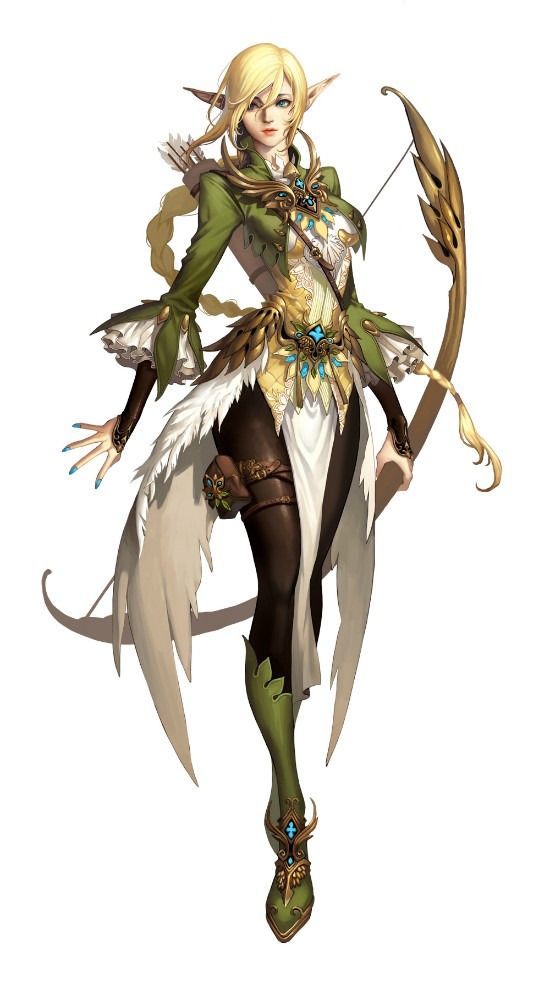
Elves: As part of the core fantasy races, but because of the world creation mythos, there are eight distinct varieties of elves, The Hearth Elves, being of sound mind and spirit, living above ground in large stone buildings, the Wood Elves, a classic, as are Dark Elves, Sea Elves and Desert Elves, but I've also included a second Underground Elves race and an above ground Evil Elven race so theres a bit more balance.

Dwarves: Again, classic core fantasy, with some small twists. Since alot of my world was developed while reading Terry Pratchett, my female dwarves have beards, but as is always plausible, not every dwarven culture will be identical, so there are the two offshoot varieties, where the men shave and where the women shave.. Also there are two 'evil' varieities, The Dark Ones, who've been trying to get magic going in their culture, very anti-dwarven.. and this has caused some bad blood.. and the Dwarvult, Dwarves that take on Mechanical advantages, but lose their humanity in the process.

Halflings: Both Hobbits and Halflings, but also the Dwarflings and Elflings, not named by themselves, but by external cultures because of who or what they remind them off.. Hobbits as we known and love from LoTR and Halflings being the curious busybodies, Dwarflings are bearded, but they're actually more into lore and knowledge and magic, and Elflings are laid back, casual and less likely to achieve anything in life, regardless of their taller, lithe, pointed ears and aloof looks.

Gnomes: come in two major varieties, the studious, well spoken, cultured artists of metal, jewellry and fine arts, with a dash of magic in there from time to time, and the uncultured nature loving tricksters who prefer to cast bogs spells on travellers than anything much else.

Interesting Goblin!
Goblins have 1 of their sub-species that's a playable race, and they in kind have two sub-sub-species. The Ugly, spiteful, yet intelligent and calculating masters of the counting houses, and the bookish, foppish readers of great works and great wit. Both of which usually reside in large cities within or around the banks and libraries respectively.

Gelfling, Friend?!
Gelfling: A shorter than elves and humans, but taller than dwarves and halflings race, they have an affinity for inner magics and attunement for nature, the females have gossamer wings that can used to float down safely, and they have a kind of telepathic ability within their race or with races that have similar abilities.

Caitshee: A race that seem to have evolved from cats, not so much a cat person, but cat-like in many ways. they have a selfish kind of nature, less likely to move about in groups, but have a need to be around others for safety and comfort. Caitshee sometimes get attached to their friends, but would never admit it.. its not sure if they view themselves as the pets or the masters (or both)

I am Groot!
Dryads: When a nature spirit leaves its environment for too long it can sometimes get stuck in its humanoid shape, often when this happens they seek out others of their kind and form communities and protect nature and its flora and forna from those who would seek to destroy it. The Dryads come in a wide variety of abilities based on their nature, be it forest, pond, stream, cave or swamp.

Half Forms can exist from any of these varieties, players choose which parent would have raised them, and typically will take the average of both races for characteristic modifiers, the common variants are half-elf, half-orc, but players being players, don't be surprised to see a half-caitshee, half-dwarf (would that be a dwarfshee or a caituarf?)

So now we get to the part where we explore the other variants, what to choose to add to the books..

I have been contemplating having one section about playing as 'bad' races, Orcs, Lizardmen, Goblins, Kobolds and such, Sometimes players find it fun to try the other side, but I always make a point of how brutishly short their lives are, the dog eat dog world they live in means constant fear, even from their own group.. 

But for now, lets contemplate the following:

Giants, Ogres, Trolls or Golems: The bigger problem with large bulky beasts of characters is logistics.. getting anything for them as armour or weapons is pretty much impossible in standard towns, so everything has to be crafted specifically. Also food costs, a Troll at 9ft isn't going to be eating 1.5 times his size, no, the ratios of weight and energy usage means at least double the meals, if not triple. Dungeon adventures become impossible, local towns are more likely to hire knights to slay a giant than to employ one.. so they're pretty much out.

Minotaurs, Centaurs, Satyrs and Archons: While these exist of course, and are a race that would have towns, culture, locations of interest, within their own world and in specialised places of the Coyn, I fear that humans would have not seen them as a culture of people, but as creatures, and would have likely killed off or made enemies of these races.. so for the purposes of the next book, I think they'll have to wait..  Also, Could I not just cut-n-paste any animal+humanoid together and viola another race? Harpy, Mermaid, Siren, Lamia, Naga, Manticore, Sphinx, Ganesh? Alot of 'gods' are just animal headed people..

Draconians, Gargoyles, Djinn: The only real problem I have is with these, is balance. Getting players to play their characters appropriately and not becoming the star player of the group, can be hard GMing one of these guys can be a strain, so like the Satyrs and Merfolk, they might need to be in the later books with some "Roleplaying advice" thrown into the chapter... I'll include them later, with a higher Karma cost, but maybe not for the next book.

Pixies or Sprites: Actually for a long time you could play a Pixie or a Sprite. Magic using characters as a natural effect is something that brings a little balance to early games, Magic User Sprites start with some effects and powers, rather than just "Salt" and they always have that 1-shot death danger that balances them long term.. the problem is that exact point.. 1-shot death, Pixies and Sprites are so fragile, any AoE spell will take them out of the group.. 

So what else is there?

Warforged? Being a bit anti-technology, having players rely on another form of 'magic' but one that's easier to understand or use, sortof takes the 'fantasy' out of the game for me. I represent this is many ways through the game, the only 'mecha' race are considered evil, Magicians have formed a guild to eradicate the technology of gunpowder, so any kind of AI-robot-race won't be appearing.. heck if we can't make robots work yet in modern society, it's definitely not going to exist in fantasy...

Wolf-men/Vampyres/Blended: Actually also, as long as there is some kind of balance, I don't mind the idea of a blended race, heck I have Caitshee already, so doing a Dog-man/Wolf-man/Hamster-man is going to be viable. I did have Badgerians in for a while, (Half Dwarf, Half Badger) so they might come back.. (Vampyres were Half-bat, Half Elf, a race we had for some games 10+ years ago, they worked ok, not real vampires, but more sonar-sense & day-sleepers)

Dimituative Races: The Pod People, Gibberlings or any Athropomorphic 3 foot tall creature with intelligence? Sure, why not.. If players want to play a smaller person, I think the 'easier to kill' balances with the 'bonuses to stealth' so thats going to be fair.. though I'd probably have a very very low Karma cost to play such a race.

(Rock)-Trolls: Again, Terry Pratchett influence here, but if Detrius can become a watchman, then players can play as a RockTroll. They're big, and they pack a massively mean punch, but the balance is speed and intellect. They are incredibly slow, physically and mentally, so as long as the player is a good roleplayer, I'm ok with it.

I explored the concept of 'modifying' the existing races to create new 'breeds' in the last blog, but it just felt a little .. uncomfortable.. I already had dwarflings and elflings.. but they already feel a bit 'stickytaped', but they were added such a long time ago so they sorta became canon, the gelfling might not make it to the books due to copyright, which is why I don't even consider talking about Wemics, Driders or my little Ponies.

though, I'd love to include Aughra somehow, what would she be? teifling?

And thats about it.. Sure there are a multitude of 'races' that people have invented, named and appear in books, but they all seem to fit into these categories or are just variants of what I've listed.. so maybe thats all I can do for now.. just make a chart of them all, roll some dice and blend them together?

All images were googled for, their image names unchanged, so you can copy the name and find the file to get the original locations, some come from pinterest others from blogs, so it'd be impossible for me to track down every artist for the sake of a common blog.  

Sunday, 5 February 2017

Childhood to Adult: Character Creation


Most Recent Update - Character Creation process

For a very long time, I've had one big missing element: Character creation. Now you might think this quite insane. How can you have a roleplay game without character creation... well ok, so I mean that it was not so much missing, as, my definition of character creation is a bit more 'plot' based, and that chapter wasn't properly written... at all...hence missing.
This isn't "CHARACTER" creation, beards and hair colour, even rolling stats isn't character creation..
Character Creation is creating "the Character", where was he born, what kinds of family did he grow up with and what skills did they teach him, How did that affect his choices to become a hero. 
    The Version that existed, and still does (as of this blog) is the template system. This is what most people think of when they think "character creation". Players would roll the dice and consult a chart to see what was a good character to make with the numbers they rolled. Pick a race, add race template, pick a Lifestyle, add Lifestyle template, pick a hero career, add Career template. It is/was fast, quick, efficient, and got you a character.. without any character. I had a few players who complained, wanted a more in depth creation system. claiming they felt their character was just a bunch of number and had no life (like most systems).
    So I developed a more in-depth, more story and plot based character creation, and I added a decent amount of crunch to go with it:


How Far do you want to go back?

Technically, if you want to start with your grandparents, you can. Roll up their stats, find out what they did for a living, and how that affected you. Then roll up your Parent Modifiers, adjust your stat sets and finally arrive at a set of characteristics that represents YOU.


Well, maybe not that far


So, Most players will simply roll up their own stats. I've never really been a fan of the point buy system, so while I have created a balanced system for players to use, I've also spent a bit of time creating a structured system for rolling that gives players the ability to balance things themselves (more on that later). 

My system encourages character creation to take place over 1-4 roleplay sessions. You roll up your stats, take a childhood skill list based on where you were born (and where your group will roleplay) then an apprenticeship, which gives you an approx 12yr old.. then you and your 'group of friends' can go out and discover things (Session #1)
Next, your progress your characters to teenagers, take a Journeyman skill set, based on whats available, and roleplay your 'friend circle' as teenagers.. get in trouble, have a local fight with the rival gang, or get lost discovering some ancient crypt & tunnels, that everyone has gone through before, but maybe 1-2 coins were left behind (a treasure to a teen, worth 10 years of pocketmoney) (session #2)
Lastly, why did you become an Adventurer.. take on the Adventurer path that suits you, grab the skills from it, but it also lists skills that you can choose to take, Now the player gets more choices, where to become more skilled, things that don't match the mundane life you left behind..your gang finds some clue, maybe something you already had in your attic, a map in a painting frame, with a stashed coin with holes in it.. now you take your team of adventurers and go find one eyed willies treasure (session #3-4)

Why this works better than the old man at the fire

The old man begins to tell you a story of a dungeon...
The players, realise its a plot hook and leave the campsite..
The DM cries, as all his work for 3 weeks is useless
When players come together, create characters and start roleplaying, there is a missing element of 'how did we get here' its assumed that this will be filled in afterwards. It often never happens. When it doesn't, and a conflict within the group arises, there is no logical reason for the group to stay together, they 'just do' and deal with the conflict 'offline'.. what I mean by that is they don't deal with it in game, so these characters have some unknown reason why they suddenly hate each other, draw weapons, start to fight, but calm down and are best of friends, without ever resolving the reason why they fought.

By including a whole 1-3 roleplay sessions prior to the main plot, all those 'unknowns' become more obvious. Turns out that all this time stevenson and harold were at odds because stevenson got the extra treasure when they were kids and it just ate into harold, and made him resentful to stevenson. (in real life, their players just don't get along, but now we have more backstory)

Also, maybe its just my groups, but I only ever really had 1 player write detailed backstory for their character, sometimes this backstory would be 3 pages and often included some very dubious connections, in that the player was now noble blooded, friends of three other noble families and received a monthly stipend of a few thousand dollars.. game & plot breaking backstory.. 

So now, all players have a backstory, all players have something to refer to in game & in plot.. Also they have a little more than 5 minutes of 'love' for their character.. in this method, I've yet to have throw-away suicides, so they could get a 'better character', though I have had plot reasons for players to 'need' to wade into a suicide missions, which again, made more sense because we had backstory.

This is not for everyone.. or is it?

If your group is only playing 1-4 sessions for an adventure, then having a break and playing a different system, then obviously this isn't for you. But if your going to play for anything longer than two months, I'd suggest this as a viable option, and remember, you can always do this in stages.. flashbacks are a wonderful 'break' from the regular..

The Flashback

I've attempted this quite a few times, and with one exception (I'll get into next) its a great way for players to develop a better background.

The biggest factor is the introduction of your characters in a more unique way that average. You start the game, lets say at 5th level, progress for several adventures and you're around 7th and about to take down the end boss.. all seems hopeless, then the GM points out that you've all forgotten something...

The GM passes the characters blank charactersheets and has them copy the basic stats over, and they're all level one or two, the characters are mid adventure, they're entering a simple tomb, and begin play...

The adventure is a fairly straight forward one, nothing too extreme and guarenteed the players are going to win, but just 'how' they win is important.. push to make some lasting effects on characters, wounds that can become scars, rare, exotic burns or items mundane but interesting, powerful artifacts that do nothing.. once they have acquired the end goal, return them from the 'flashback' to the main story.. that artifact, the one they acquired all those years ago? its the object required to take down the end boss.. they've been carrying it all these years and didn't realise it.. 

Mechanically.. the Flashback is the same as RPing the backstory, just later in the game.. Some GMs might award the XP gained from that adventure to the group, based on their choices and results, some might chalk it up to 'backstory', but the point is, you've added more 'character'.


Dungeon Delvers Changes

Since Dungeon Delvers emulates Dungeonworlds System but as a quick "we made most of the choices for you" kind of way, We needed to made backgrounds and races a kind of "sub-profession" system, This has some interesting nuances that many game systems should probably consider.. I'll blog about these in more detail, but in essence.. you can level up your race and background, to represent your backstory & flashbacks, without breaking the flow of the game. 

Monday, 30 January 2017

Races and Mono Culture, but is it bad?

TL;DR In World Building, there are several simple ways to make our worlds, as long as no-one peeks under the rugs, they won't notice, we try not to have 1 mega city on planets in space operas, but it happens. We try to be more interesting than Pseudo Europe Fantasy Worlds, We try to make our worlds Unique and Interesting, but possibly, in doing so, we break the realism, without knowing.

Not having posted anything from overthinking too many of my drafts, I decided to just publish my random thoughts on the topic of races and how come every game has 1 type of each.. 


While its cliche, maybe non-cliche is unreal


What I mean by mono-culture is the idea that all Klingon are warriors, all elves are aloof archers who live in the woods, or all Dwarves are greedy makers of metal-craft, things like that. Mono-culture is the idea that within a given species, people, or nation that all beings share the same traits.   In the real world this leads to all sorts of unpleasantness and badness, but in world building this is an issue as well. Even when you have a really solidly built world it can be easy to leave some cultures as Mono-cultures. Its easy, and sometimes people won't notice. And because they won't notice it is even easier to do.
Japan is Japan, because its an island on a volcanic rift, next to a flat terrain, surrounded by mountains. If The origins of the Japanese started in Africa, then surely they'd just end up evolving into Africans?!We try to be all unique and interesting by creating things that are different, things that just feel so "wow, thats cool!" Mongolian Orcs? done.. how about African Orcs? hmm, interesting.. Goblins? maybe they invent paper first and become the gnomish race, and gnomes get all crotchety and become the evil malicious beings as depicted in many old European stories. Asian Elves? French Dwarves? Australian ... Nah lol.. too hard to imagine any fantasy race as having a boomerang and drinking beer at a pub, instead of having wars..I talk of this recently because I'm looking at what races I could include in my books to add a bit more than just plain ole 'elves, dwarves, hobbits, goblins and orcs'.Now, I've started getting very specific, even creating charts..Just Based on Height, we already see some potential for races.. what would a tall gnome be? really short dwarves? dwarflings?
Generic Race4 foot5 foot6 foot7 foot?
Humans:Halflings?Humans?
Elves:?GelflingsElves?
Dwarves:?Dwarves??
Orcs:GoblinsOrcsHob-Goblins
Gnomes:Gnomes???
?:???


Now, we could do all sorts of variables and come up with a bunch of races, 'bearded / not / can be", "muscled / lean".. is a Hob-goblin just a slightly taller, yet lean Orc? What would a 7ft tall lean, bearded dwarf be?

At the end of the day, its all a moot point, if no-one wants to 'play' that race.. We have the sets we have because they fit a 'set' and are easily identifiable, we can quickly assign steroetypes, and can get on with our life.. 

You're walking down the street, when you come across some gruff looking ... fill in the blank.. did you choose elves? less likely I'd say.. but since dwarves and orcs are usually gruff looking, why add gruff at all..

Ask your players.. 

You're walking down the street, when you come across some Dwarves.. describe them too me..

Your players are going to give you the classic tropes, even if your world HAS NONE of those types of Dwarves, they're so ingrained as gruff, bearded, stocky, armoured..

My Dwarven females have beards, because Terry Pratchett said so. I've justified it, I've argued for it, I've explained it, and I probably always will, players don't always expected a female dwarf to be bearded.. 

but that's also a great way to 'surprise your players' with new things..   If the humans of your world don't expect bearded women, then your players won't either...

But what I'm getting at is the need to make those niche races and how they drag a game to a halt.

Losing the Immersion to explain your world

At the end of the day, you want the immersion to continue, you want your players to continue to feel like they are 'in' the world, and breaking the 4th wall to explain the world or the rules.. or physics, is always going to be a problem.. so should we stop it?Some RP systems are less crunchy, for exactly that reason.. and I applaud the ideal of full immersion, no interruptions.. except that without that crunch, a lot of players are going to lose that immersion, the very second the GM does something or says something that goes against the players very notion of what is and isn't real"last week, the Orc was a matched battle, yet this week a similar, nay, even weaker looking Orc is defeating the whole group.. why? it seems so unreal? if the GM is trying to demonstrate some key.. Oh dang, I meta'd the situation, lost immersion... "
This is what I talk about when I talk about 'realism' and 'reality' in gaming.. but I digress..By sticking to the tropes, we can get players to continue with the flow of the game without losing too much time explaining.. Dwarves, righto, got it, Elves, sure, understood.. Snirfnebblin.. ok.. hang on what?So should a game have more unique races? should it have more interesting sub-cultures? sure, I am wholey on the side of teaching players more about the real world by using those references in game, but just be careful how far you stray from those norms..And remember.. if its unique and interesting for the players, their minds are going to go 'nutz' for information, so the most logical thing is to describe them with alot more detail and attention than you would for the generic races.. just like you'd notice big-bird walking down your street..

see what I did there?

Monday, 19 September 2016

Board Game Creation

Over the last few months, I was contemplating what to present at Concentric, the local board/RPG convention, where we have our own board game designers group. I was keen to present something more finished, so I chose the simplest of all my game ideas and pulled it out of storage, dusted off the 3.5in floppies and loaded up my game documents (and quickly copy/pasted them all into google docs for future access)

The Game I chose had no name, It was a blurb: Heroes entering a dungeon, players don't control heroes, they influence heroes, to ensure no-one is able to determine which heroes you want to win, you play influence on all heroes, sometimes good sometimes bad, sometimes indifferent.

Over the course of the game, you can slowly determine, who is 'influencing' which group the most, and if your goal goes against that, can push to block that hero group more often.

No, Not this Ludo
This Ludo

 Its Ludo meets Bridge, wrapped in a fantasy setting.


There are only really 3 types of card you can play, Movement, Blocking and Enhancing. Each has a few varieties of cards, but just stating those concepts really cements my own idea of how to present that. 
The "heroes" are Red, Green, Blue and Yellow, so I could use Purple, Orange and White to represent Movement, Blocking and Enhancing.

The Board has a path from the players start, to the centre, 10 squares.

The Concept is simple, you play a movement card to move forward, a creature card to slow down someones movement, or an enchancement card to increase the chance that the movement card will allow movement.. what I meant by those last points.. a creature will block you, if your hero group is un-enhanced, but if enhanced, the creature is killed (removed from the path) and the hero continues to move forward.

When the Heroes reach the treasure at the end, they claim the treasures. Once all treasures are claimed, the players reveal their "favoured" heroes and points are claimed.

The Game can play as quickly as 20 minutes, but if you use the more advanced rules, can go for an hour. I've tested with 2-4 players a few times, but at ConCentric, I managed to victimise get eight players, to really test its limits.. (i.e, could you pull this out at a dinner party and play a round or two.. the answer is.. not yet)

Making a Board game is Harder than you think

I had 2.5 months, and I honestly thought I could pull off such a simplistic board game idea in that time, I really thought I'd be almost ready to think about kickstarting it once I presented at Concentric.. Whoo Boyo, No..

My Initial play tests, suggested I needed more card types, my next play test had too many. The Hero theme suggested cards that just broke the game, pushing it into hours of play, but taking them out left the game as too simplistic and we could finish in 10 minutes.

Presenting at Concentric, showed me that eight players might only work if the players all know what they're doing, because my nephews were very gung-ho, just throwing down their 4 choices, I forgot that adults like to contemplate their moves, and that meant a 10 minute turn around the board.

So, Its back to the drawing board.. I'm almost there, but its just needs something else...

Wednesday, 24 August 2016

World Building Game Update

A kind of Post-mortem / Resurrection thread of what happened with version II, How it maybe worked, how it didn't and how I can improve on it for the future.. oh and what we're doing with it.

Years Later, the Adventurers discovered a plaque that spells out the demise of the Ancient Civs: Pokemon Go!

Ancient Civs started in Feb 2016

40 Players started, each playing between one and three races, starting in the Stone Age. I personally knew about 25 players, I also played, but not wholeheartedly I guess, Each player started with 1 city, of a size 4 (max 6). Players were given a set of instructions, I was available for email at any point, we had several video conferences and I made some video instructions (well, beta attempts at this) but we still didn't get even 25% attention rate of players..

I've run several Roleplay events, and getting 100% is impossible, getting 50% for the first session is a huge turnout. Usually 10-25% is standard. My friends in sales are always asking me, how do I get such a huge turnout.. mostly because 5% is standard for a sales conference.

No Players... No Game!
And so, while I was happy with a 25% attention rate, it also turned out to be my retention rate.. i.e. week after week, I was lucky to get 1/4 of the previous weeks players to remember to make a turn.

Now imagine if your a GM, running a game, you have 8 players at your first session, 2 at your next, 1 the week later and finally, you're by yourself. Dismal.

What worked: Players were interested, getting a huge number of responses from the start meant I could have had a great game. The concept was intriguing, people wanted to see where this was going to go and how it was going to work. Some didn't believe it would, but they wanted to see the train-wreck up close.

What didn't: Players were interested in seeing things happen, almost instantaneously. Is the modern role-player, so gratified in all their dealings that they can't hold out for a month? let alone a year?

So, The Interface was lacking. I gave all players carte blanche on their 'character sheets' with a template for anyone to work from.. but pretty much everyone stuck with the template.

The Maps took too long to process, and when I got a new job, and lost 40 hours of my week, this became too much to run by myself, thankfully Rory stepped up and was a great help, but maybe too late.. players were sensing a drop in the game and maybe that contributed more than I thought.

Player vs / meeting Player, didn't happen quickly enough in many players views, and this maybe was a problem in expectation.

By the time we sorted out these problems, we'd lost the interest of over a quarter of the players. Once that happened, the players still playing were encountering 'empty' players.. they didn't respond to messages, and playing a game by yourself is boring.

How to Improve: By the end of turn 12, we had a list of things we'd have liked to have done before play started.

  • Some kind of interactive map, so players could "see" their game easier.. even if turns would still be processed by GMs, they could maybe interact with the map and get a feel for whats going on.
  • GMing needed to be done, per player, and weekly.. verbally even. I think that the 15 odd email players, should have been upgraded to skype players, having the interaction with the GM, asking questions about turns, etc. Maybe using roll20 or something for the next run.
  • Allowing more scope with turns, i.e. you can be a turn late, and pre-process your turn ahead, might have helped deal with timing, and the lack or in ability for GMs to always contact a player
  • In counter to that, NOT allowing player to fall behind, even 2-3 turns, players felt like they had already lost too much and continuing was pointless
GMing 40 players in one game sounds impossible, or at least daunting, yet I've run this game with 80 and it went well. The difference was, 80 players within arms reach, I could speak with them all withing a week, remind them of their turns, the rules, they could ask questions, make deals. heck, when we had 'negotiations' we'd do it live, it was sorta fun watching two or three people negotiate contracts about a fictional universe.


Maybe they all had the same player?
What Now: Well, not to waste all the hard work done already, the GMs and some players have elected to take up the mantle of several of our lost players, and play them on until we reach turn 50. We'll see what happens, mark records of major events, and use it as a kind of decent world for roleplay.
Yet with only 8 minds, it'll be limited in the creativity, decisions, deals and crazy that it might have had, we might allow a smaller kingdom to be swallowed up into a larger one, because its easier to deal with less paperwork, while a single player may have fought it out to the bitter end, or come back from the brink of defeat with a successful event or two.

The End game was already pre-set, A great war (on a different continent) triggers a spell turning the mountains into mud, and swamping the continent, burying all the cities and such, causing people to dig into the world to retrieve their culture, creating hundreds of dungeons, which names the very game its all run in.

DungeonWorld.

As per my promise, When its done, I'll draw it up, scan it, and all players that started will get a copy. If you were/are a player and you'd like to maintain influence on your race/culture, drop me a line and we'll work something out.

p.s. you may have noticed, I tried to blog my turns, I got as far as three blogs when things went sideways, I didn't publish the last two, because it didn't seem relevant, but maybe I'll do them in blocks of 4 turns and catch up.